top of page
Cultural Interaction Patterns & UX Challenges
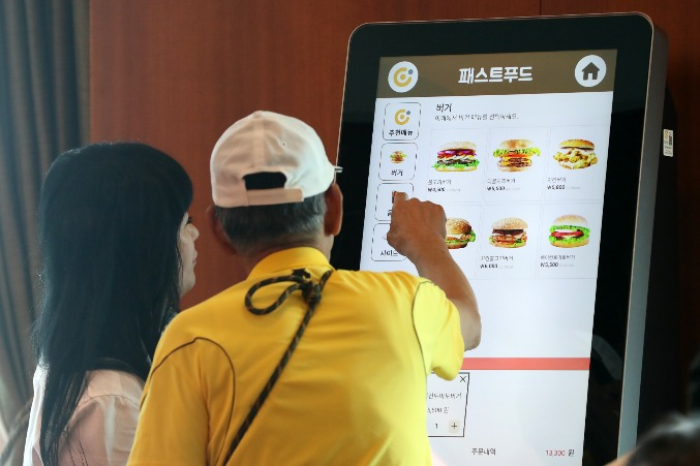
Koreans have what they call "Pali Pali" culture, which translates to "quickly quickly". Koreans value their time and prefer to be efficient and speedy in their everyday lives. This is likely a huge reason why self-serve kiosks are so popular in the first place. Digital-native users are able to quickly order and pay for their food while the employees can focus on making the food or serving it. Pali Pali culture also affects how self-serve kiosks should be designed. Ideally, the kiosks should allow customers to quickly order without hesitation, confusion, or asking others for help.
One challenge with the existing payment kiosks I saw while in Seoul is the redundant screens. Sometimes, you would get several pop-up screens to redeem points or enter coupons. There was also redundancy in the payment process, which would sometimes take the user through three screens before they could insert their card or cash.
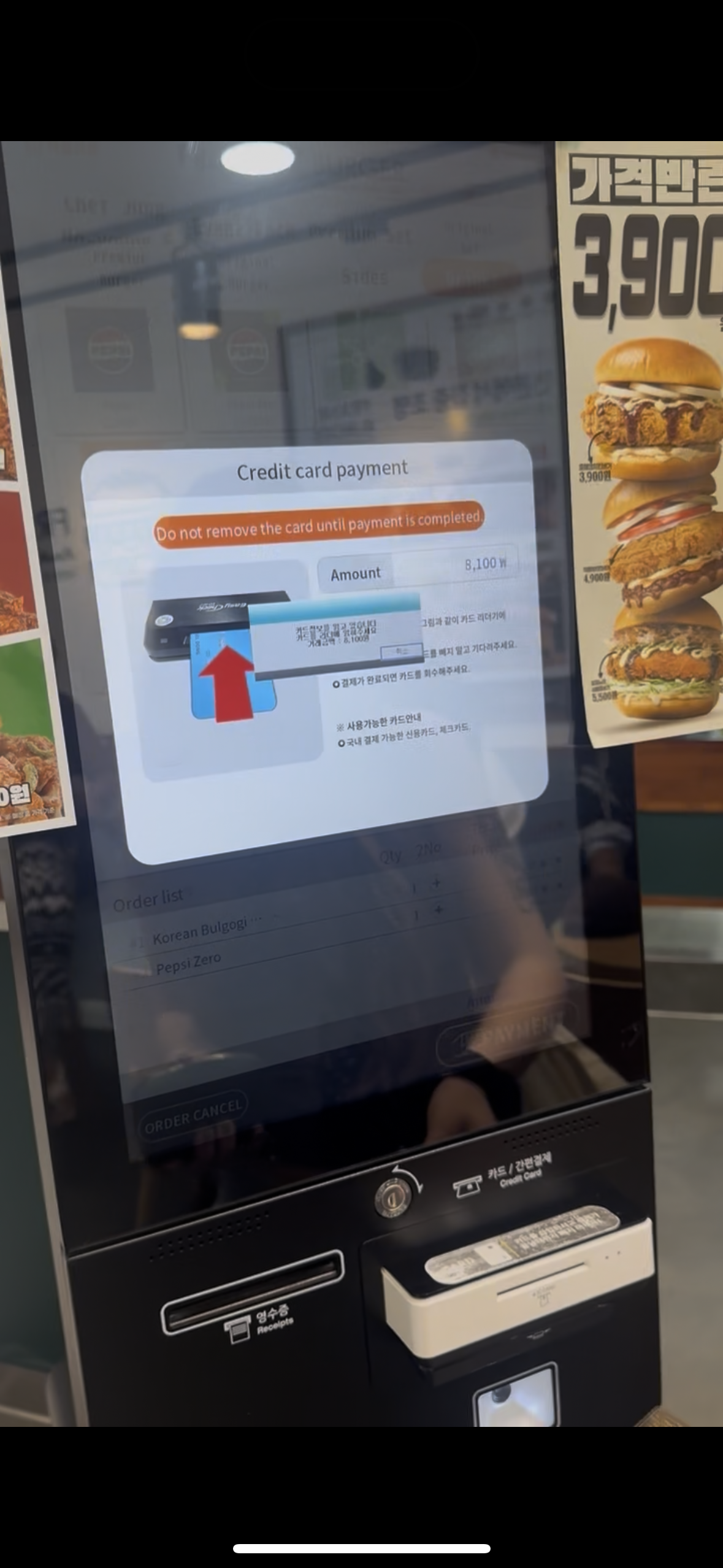
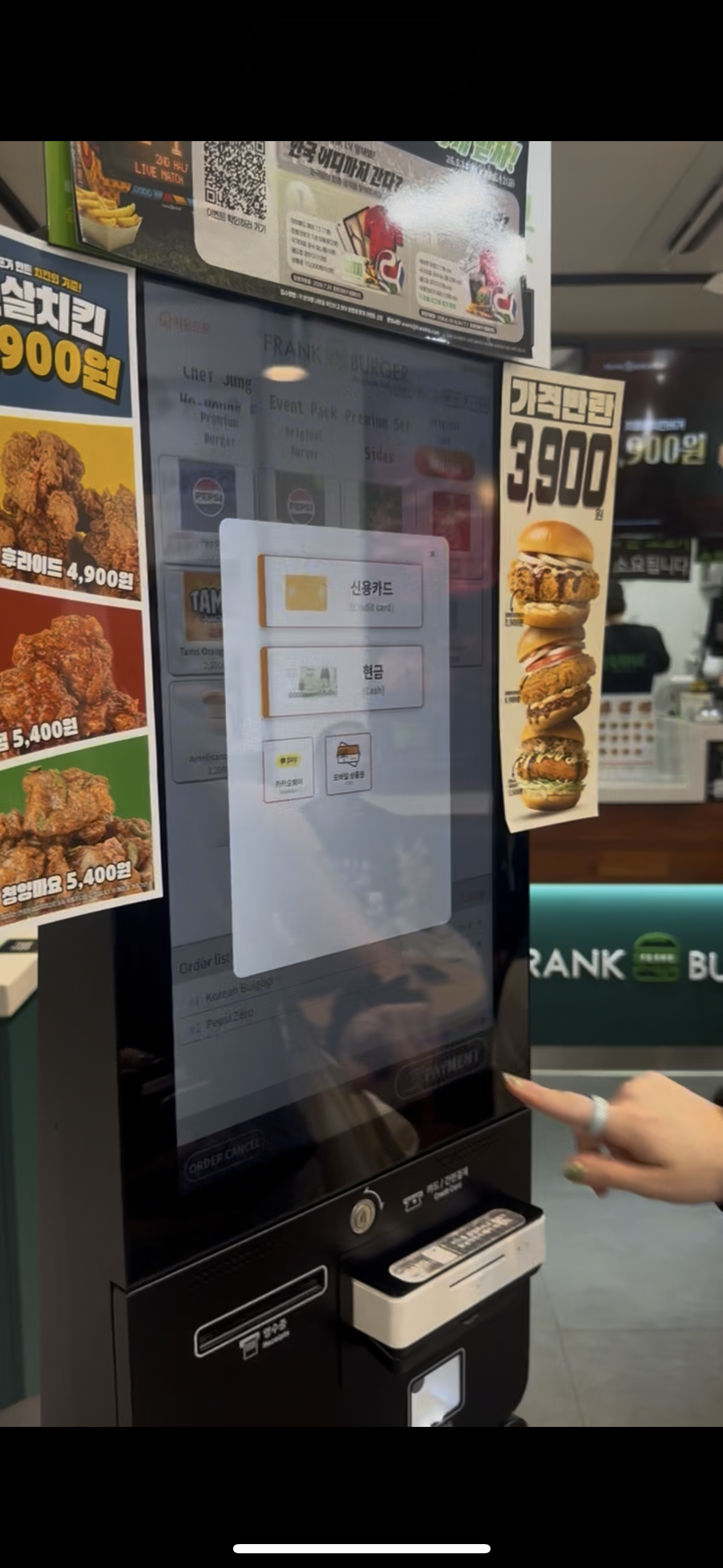
Sometimes, the text would revert to Korean, even after selecting the English translation. This would make the whole ordering and payment process longer for foreigners. The available payment methods might also be confusing for foreigners. Samsung Pay and KakaoPay are less popular in Western countries and may create some confusion during the payment process.
Additionally, some self-serve kiosks did not have a translation feature at all. This would make ordering and paying for one's food incredibly difficult for non-Korean-speaking individuals.
Date
May - June 2026
Location
Seoul, Korea

01
Cultural Interaction Patterns & UX Challenges

01
With over 9.5 million residents, Korean culture has to be pali pali.

02
The card processing screen at Frank's Burger reverts to Korean.

03
At Frank's Burger, some of the payment options are confusing or vague.
04
The loading screen at SOLSLOT reverts to Korean.

05
This kiosk lacks a translation feature.
06
While ordering at this cafe, there were unclear pop-ups, which was only available in Korean.
07
Pali pali!

bottom of page